Cardiovascular
Aug 19, 2026
Gut-brain axis: a revolutionary paradigm in the pathogenesis and treatment of ischemic stroke
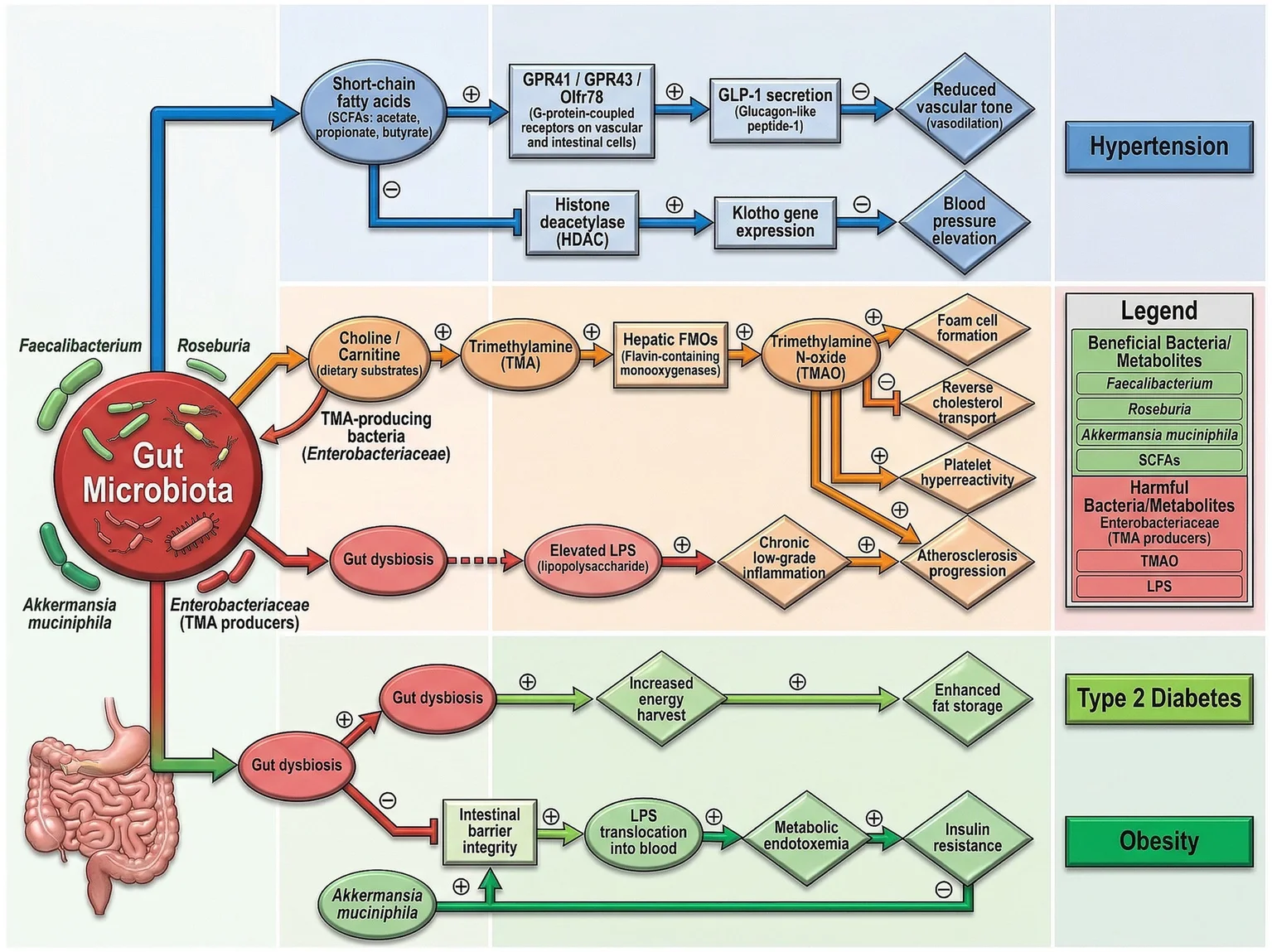
Deciphering the Microbiome-Gut-Brain Axis in Ischemic Stroke: Molecular Pathways, Organellar Dysfunction, and Sex-Dimorphic Precision Therapeutics
Abstract
Ischemic stroke triggers systemic physiological alterations that extend beyond the central nervous system, establishing a bidirectional pathological crosstalk along the gut-brain axis. Cerebral ischemia induces rapid sympathetic activation and systemic immunosuppression, leading to intestinal dysbiosis, mucosal barrier degradation, and bacterial translocation. Reciprocally, microbial dysbiosis modulates secondary ischemic brain injury through systemic neuroinflammatory responses and metabolic alterations. Key molecular mediators include short-chain fatty acids (SCFAs), which exert neuroprotective effects via G-protein-coupled receptor (GPR41/43) signaling and histone deacetylase inhibition, and pro-inflammatory metabolites such as trimethylamine N-oxide (TMAO) and lipopolysaccharide (LPS). LPS translocation engages Toll-like receptor 4 (TLR4)/NF-κB signaling, promoting microglial activation and NLRP3 inflammasome assembly. Sex-and-Gender-Based Analysis (SGBA) reveals profound sexual dimorphism within this axis. Estrogen (17β-estradiol) preserves tight junction protein expression (ZO-1, occludin) and shifts microbial composition toward SCFA-producing taxa, thereby blunting ischemic neuroinflammation compared to age-matched male cohorts. This review synthesizes the molecular pathways, organelle stress cascades, and sex-specific regulators governing the gut-brain axis post-stroke. We advocate for personalized, sex-informed therapeutics targeting the gut microbiome to improve functional outcomes following ischemic cerebrovascular events.
Introduction & Cellular Mechanisms
Ischemic stroke remains a leading cause of long-term disability and mortality globally. The acute occlusion of a cerebral artery initiates an ischemic cascade characterized by ATP depletion, excitotoxicity, mitochondrial dysfunction, and neuroinflammation. However, acute brain injury is not an isolated intracranial event; it rapidly communicates with peripheral organ systems. The gut-brain axis—a complex bidirectional communication network comprising neural, endocrine, immune, and metabolic pathways—has emerged as a master regulator of post-stroke pathogenesis and recovery.
Following focal cerebral ischemia, the central nervous system (CNS) initiates an intense systemic response driven by hyperactivation of the sympathetic nervous system (SNS) and the hypothalamic-pituitary-adrenal (HPA) axis. Norepinephrine release from sympathetic nerve terminals in the gut wall impairs intestinal motility, reduces mucin secretion, and increases intestinal epithelial permeability. Concurrently, local ischemia-reperfusion injury and systemic immunosuppression lead to a collapse of the intestinal mucosal barrier, often termed "leaky gut syndrome."
```
Acute Ischemic Brain Injury
│
▼ (SNS / HPA Axis Hyperactivation)
Intestinal Epithelial Barrier Breakdown & Mucosal Dysbiosis
│
├─► Translocation of LPS & TMAO ──► TLR4 / NF-κB / NLRP3 Activation ──► Microglial Priming & BBB Breakdown
│
└─► Depletion of SCFAs (Butyrate) ──► Loss of HDAC Inhibition ────────► Accelerated Neurodegeneration
```
Molecular Targets and Inflammatory Signaling Cascades
At the cellular level, the breakdown of the gut barrier facilitates the systemic translocation of pathogen-associated molecular patterns (PAMPs), predominantly lipopolysaccharide (LPS) derived from Gram-negative bacteria. Systemic LPS binds to CD14 and Toll-like receptor 4 (TLR4) on peripheral immune cells and brain-resident microglia:
Organelle Dysfunction in the Gut-Brain Axis
Microbial dysbiosis and neuroinflammation trigger severe organelle stress in both colonic enterocytes and cerebral parenchymal cells:
1. Mitochondrial Dysfunction: Translocated microbial toxins and elevated ROS compromise mitochondrial membrane potential ($\Delta\Psi_m$), inducing mitochondrial permeability transition pore (mPTP) opening. This results in cytochrome c release, activation of caspase-9/3, and execution of apoptotic pathways in endothelial cells and neurons.
2. Endoplasmic Reticulum (ER) Stress: Sustained neuroinflammatory signaling activates the unfolded protein response (UPR) pathways via PERK, IRE1α, and ATF6. In enterocytes, persistent UPR activation destabilizes the assembly of tight junction proteins, exacerbating intestinal hyperpermeability.
Sex-Dimorphic Regulation & Translational Implications
Biological sex significantly dictates the incidence, pathophysiological trajectory, and clinical outcomes of ischemic stroke. Integrating Sex-and-Gender-Based Analysis (SGBA) into microbiome-gut-brain research reveals fundamental sex-specific mechanisms that govern neuroprotective versus neurotoxic outcomes.
```
Biological Sex Modulation of the Gut-Brain Axis
│
├─► Female (17β-Estradiol / ERα/ERβ)
│ ├─► Upregulates Tight Junctions (ZO-1, Occludin)
│ ├─► Enriches SCFA Producers (Lactobacillus, Bifidobacterium)
│ └─► Inhibits Microglial TLR4/NF-κB Signaling
│
└─► Male (Testosterone Predominance)
├─► Elevated Baseline Microglial Priming
├─► Higher Susceptibility to LPS-Driven Inflammasome Activation
└─► Rapid Depletion of SCFA-Producing Taxa Post-Ischemia
```
1. Estrogenic Protection of Intestinal Mucosal Barrier and Microbiome Architecture:
Sex steroids, specifically 17β-estradiol working via estrogen receptors α (ERα) and β (ERβ), regulate gut microbiota composition and mucosal immunity. Estrogen signaling reinforces intestinal barrier integrity by upregulating tight junction transcripts (*Tjp1* encoding ZO-1, *Ocln* encoding occludin, and *Cldn5* encoding claudin-5). Premenopausal females exhibit a higher abundance of short-chain fatty acid-producing organisms (*Lactobacillus*, *Bifidobacterium*) relative to age-matched males. Loss of endogenous estrogen during menopause or post-ovariectomy results in gut microbiome shifts toward a pro-inflammatory, male-like profile, accompanied by increased intestinal epithelial permeability and magnified neuroinflammatory responses following ischemic challenge.
2. Sex Differences in Microglial Activation and Neuroinflammatory Response:
Male and female microglia exhibit distinct transcriptomic and functional profiles. Male microglia display elevated baseline expression of genes regulating oxidative phosphorylation, cell motility, and pro-inflammatory signaling (including TLR4, MYD88, and IL1B). Consequently, male brains demonstrate enhanced sensitivity to circulating, gut-derived LPS, resulting in exacerbated microglial priming and neuroinflammation. Conversely, female microglia exhibit a transcriptomic signature skewed toward tissue repair and resolution of inflammation, mediated in part by estrogenic suppression of NF-κB transcription.
3. Translational Implications for Precision Medicine:
The observed sexual dimorphism necessitates sex-specific therapeutic strategies targeting the gut-brain axis:
* Customized Microbiota Restoration: Administration of specific postbiotics (e.g., exogenous sodium butyrate or targeted SCFA cocktails) must consider sex-specific basal receptor densities (GPR41/43) and endogenous metabolic pathways.
* Hormone-Aware Microbiome Modulation: Postmenopausal females undergoing neurovascular rehabilitation may require combination strategies that integrate selective estrogen receptor modulators (SERMs) with synbiotics to fully restore mucosal integrity and attenuate post-stroke systemic neuroinflammation.
* Sex-Stratified Biomarker Profiles: Circulating TMAO, LPS, and SCFA ratios must be interpreted against sex-specific clinical reference ranges when assessing stroke risk or predicting post-stroke cognitive impairment.
Conclusions & Clinical Outlook
The paradigm shift recognizing the gut-brain axis as a primary driver of ischemic stroke pathogenesis opens unprecedented avenues for targeted therapeutic intervention. The intricate inter-organ communication—bridging intestinal mucosal immunity, microbial metabolite dynamics, and central neuroinflammation—highlights the limitations of mono-targeted neuroprotective strategies.
Future research must prioritize translational models that systematically apply SGBA. Key clinical imperatives include:
Key Insights
References
1. Cryan, J. F., O'Riordan, K. J., Cowan, C. S. M., Sandhu, K. V., Bastiaanssen, T. F. S., Boehme, M., ... & Dinan, T. G. (2019). The Microbiota-Gut-Brain Axis. *Physiological Reviews*, 99(4), 1877–2013. https://doi.org/10.1152/physrev.00018.2018
2. Benakis, C., Brea, D., Caballero, S., Faraco, G., Moore, J., Murphy, M., ... & Iadecola, C. (2016). Commensal microbiota affects ischemic stroke outcome by regulating intestinal γδ T cells. *Nature Medicine*, 22(5), 516–523. https://doi.org/10.1038/nm.4068
3. Spychala, M. S., Venna, V. R., Jandzinski, M., Doran, S. J., Durgan, D. J., Ganesh, B. P., ... & McCullough, L. D. (2018). Age-related changes in the gut microbiota influence systemic inflammation and stroke outcome. *Annals of Neurology*, 84(1), 23–36. https://doi.org/10.1002/ana.25250


